
Description
What the GE Profile PTD60EBSRWS Is
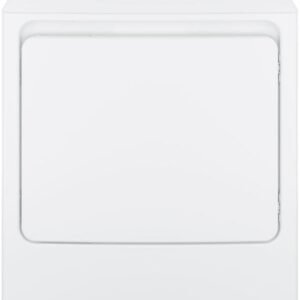
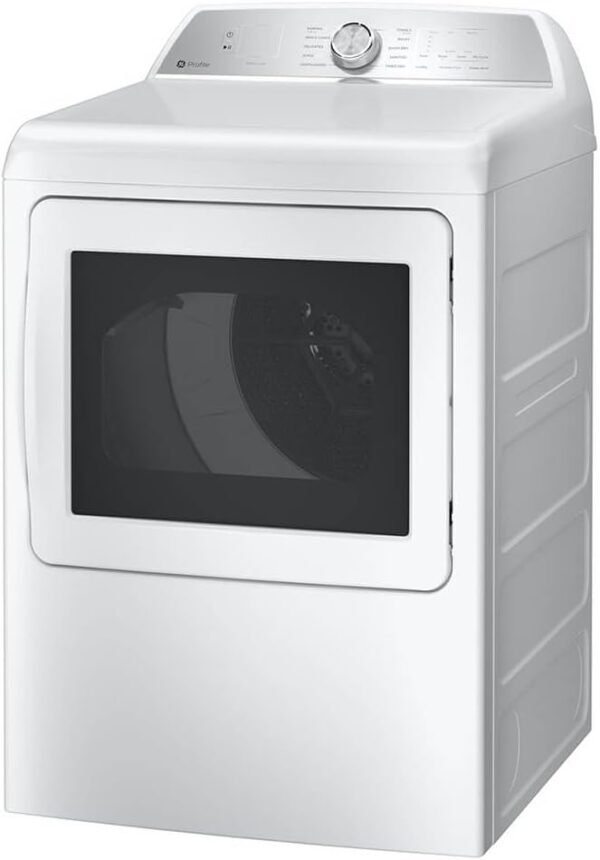
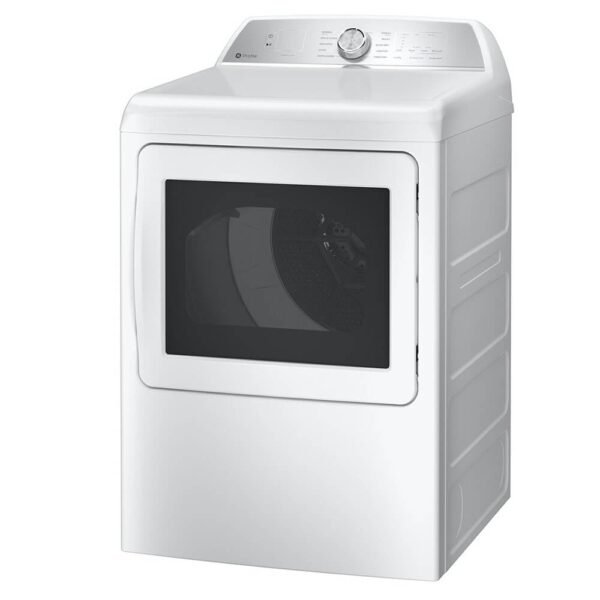
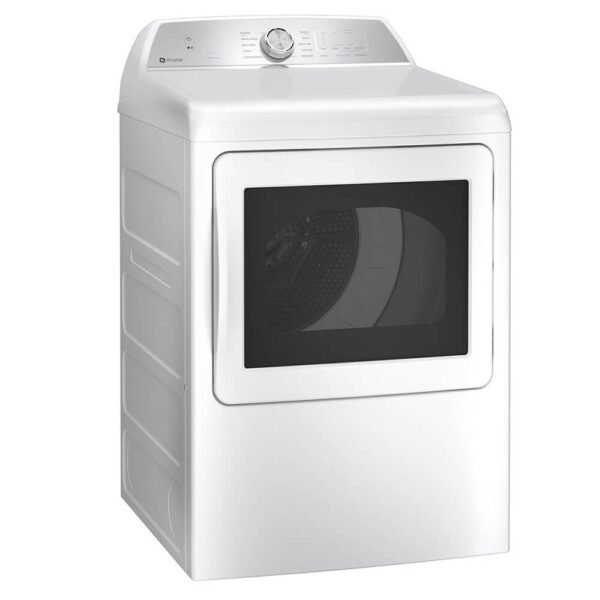
The PTD60EBSRWS is a 7.4 cubic foot electric dryer from GE’s Profile line, finished in white with a silver backsplash. The drum size is conventional for a full size machine, and what distinguishes it is the amount of sensing and connectivity built around it.
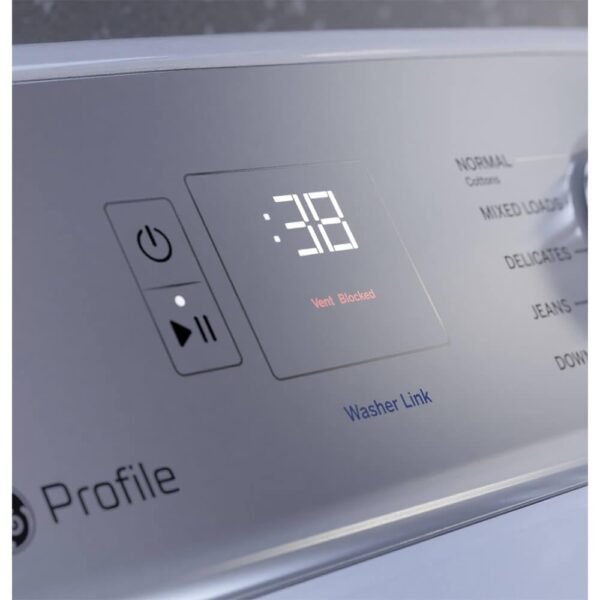
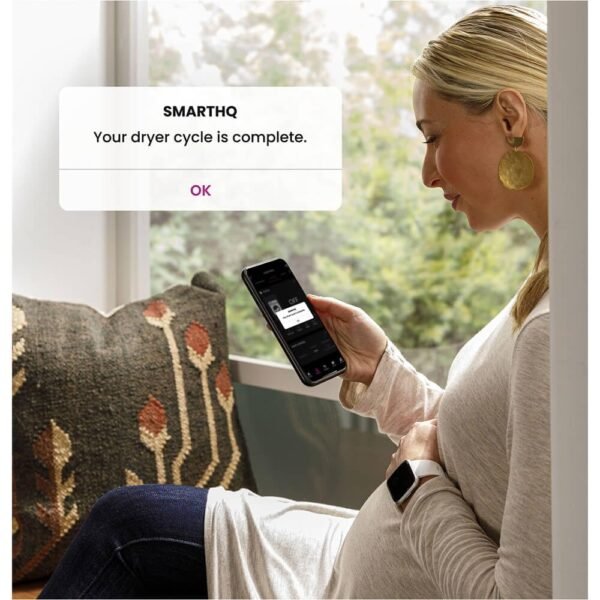
GE lists Sensor Dry with dual thermistor technology, Washer Link, a Sanitize Cycle, a Check Vent notification, Damp and cycle notifications, Eco Dry, Quick Dry, a saved favorites setting and downloadable extra cycles through the SmartHQ app. That is a long feature list, and unusually most of it addresses real problems rather than adding novelty.
Washer Link Is The Interesting One
Washer Link wirelessly connects a compatible GE washer to this dryer so that the dryer sets its own cycle based on what was just washed. It removes a step people get wrong routinely, which is selecting a drying cycle that does not match the load.
The obvious caveat is that it needs a compatible GE washer to do anything. Bought alongside a different brand, or an older machine, the feature sits idle. Anyone building a matched pair should check compatibility with the specific washer model, and GE’s own front loaders such as the GFW850SPNRS are the natural partners to look at.
Sensing, Venting And Safety
Sensor Dry uses two thermistors monitoring temperature and moisture continuously, so the machine stops when the clothes are dry rather than after a set time. Over drying is what wears fabric out, and a moisture sensor is the single most valuable feature on any dryer.
The Check Vent notification is the safety relevant one. It tells the household when the exhaust duct needs cleaning. A restricted duct makes every cycle longer, wastes energy, and allows lint to accumulate where it becomes a fire risk. GE frames this as ensuring safe operation, and that is a fair description rather than marketing.
GE also states that the venting system supports runs up to 120 feet. That is an unusually long figure and it is genuinely useful, because it means the machine can sit further from an exterior wall than most dryers allow, which opens up installation positions that would otherwise be impossible. It does not remove the need for the duct to be correctly sized and properly terminated, and the equivalent length calculation, which counts elbows and bends against the total, still applies. Take the specifics from GE’s installation instructions rather than assuming 120 feet of any routing will work.
The Sanitize Claim
GE states that the Sanitize Cycle reduces 99.8 percent of bacteria found in laundry. That is a specific number, which is better than a vague claim, but the listing does not name a testing standard, a certifying body or the organisms tested. It should be read as the manufacturer’s stated figure rather than an independently certified result. Anyone buying specifically to meet a defined standard should ask GE for the underlying test.
Electrical Requirements Are Not Published
No voltage, no amperage and no plug type appears anywhere on this listing, on a full size electric dryer.
Machines of this type in North America normally require a dedicated 240 volt circuit with a matching receptacle, and a space with only 120 volt outlets needs electrical work first. Read the requirement from GE’s installation instructions and the rating plate, and have an electrician confirm the circuit and receptacle configuration before delivery, since dryer outlets exist in three wire and four wire versions and the cord must match.
Highlights
- 7.4 cubic feet of drum with dual thermistor Sensor Dry.
- Washer Link cycle matching with a compatible GE washer.
- Check Vent notification for duct maintenance.
- Venting stated to support runs up to 120 feet.
- Sanitize Cycle with a stated 99.8 percent bacteria reduction.
- Damp notification, Wrinkle Care, Quick Dry, Eco Dry and a saved favorites setting.
- Built in WiFi with downloadable additional cycles, Energy Star qualified.
Things To Consider
The dimensions are published twice and disagree. One field gives 48 by 32 by 30 inches and another gives 31 inches deep by 27 inches wide by 46 inches high, while GE’s own description says 46 high by 27 wide by 31 deep. The description figures are consistent with the second specification field and are the ones to work from, but they should still be confirmed against GE’s specification sheet before the space is committed.
No electrical data is published, and no duct diameter is given despite the 120 foot venting claim.
The connected features are worth weighing carefully. Downloadable cycles, app notifications and Washer Link all depend on software that changes over the life of an appliance, and none of them should be the deciding factor over a machine’s drum, motor and sensors. The sanitize figure carries no named standard.
Wrinkle Care and the damp notification are the two features most likely to be used daily. Wrinkle Care extends the tumble without heat so a load left in the drum does not set into creases, and the damp notification signals the point at which shirts and linens are easiest to hang or press. Both are small, both are mechanical rather than software dependent, and both outlast whatever happens to the app. GE fits the same pair to simpler machines including the GFD55ESSNWW.
The listing also shows no customer ratings at all, so there is no accumulated feedback to draw on. Households that want the sensing without the connectivity should compare simpler machines in the dryers category, such as the LG DLE3470W, and those pairing a new washer at the same time should check the washers category for capacity matching.
Who Should Buy It, And Who Should Not
It suits a household buying a matched GE pair, with an existing 240 volt circuit, and particularly one whose laundry room sits a long way from an exterior wall, where the 120 foot venting capability solves a real problem. The vent notification and dual thermistor sensing are substantive rather than cosmetic features.
It is the wrong purchase paired with another brand of washer, where no 240 volt provision exists, or where the buyer wants the simplest possible machine with no software in the middle.