Description
Strengths of the Presto 02811 12-Cup Stainless Steel Coffee Maker
Using this coffee percolator brought back a nostalgic feeling with its traditional styling and the comforting sound of bubbling coffee. The stainless steel construction, including the filter basket and perk tube, stands out for its durability and easy maintenance. I appreciated how it brews from 2 up to 12 cups at a pace of about a cup per minute, which perfectly suits both small and larger gatherings. The signal light that indicates when the coffee is ready is a simple but effective feature, saving me from guessing and avoiding over-extraction. Another strong point is the automatic keep-warm function, which holds the coffee at an ideal temperature without burning it or drying it out.
- Durable stainless steel build, including inner components
- Brews coffee quickly at a rate of one cup per minute
- Signal light clearly shows when coffee is ready
- Keeps coffee hot without overheating or bitterness
Drawbacks Worth Noting
Despite its many perks, I found a few aspects that might bother some users. The coffee maker’s weight is on the heavier side, something to consider if you plan to move it around often. While the removable power cord is handy for storage, it feels a bit short, limiting placement options near outlets. Cleaning requires care since the unit isn’t immersible, and harsh abrasives can ruin the stainless steel’s gloss. Also, the traditional design might not appeal to everyone, especially those who prefer modern, sleek aesthetics. Lastly, it lacks advanced features like programmable timers or strength control, which some electric coffee makers offer.
- Heavier than many modern coffee makers
- Short power cord restricts placement flexibility
- Requires careful cleaning to maintain stainless steel shine
- No programmable timer or brew strength options
Performance and Brewing Experience
This percolator’s performance impressed me with how it consistently produced a rich, flavorful cup of coffee. The fully automatic operation simplified my routine—just fill water and grounds, then start brewing. The coffee came out piping hot, which is crucial for early mornings. I noticed the brew cycle speed was reliable, delivering coffee at a steady pace without rushing the process. However, the flavor profile is classic percolated coffee, which might be a bit strong or bitter for those used to drip machines or espresso makers. My family and friends seemed to enjoy the robust taste, especially those who favor darker, bolder brews.
Design and Build Quality
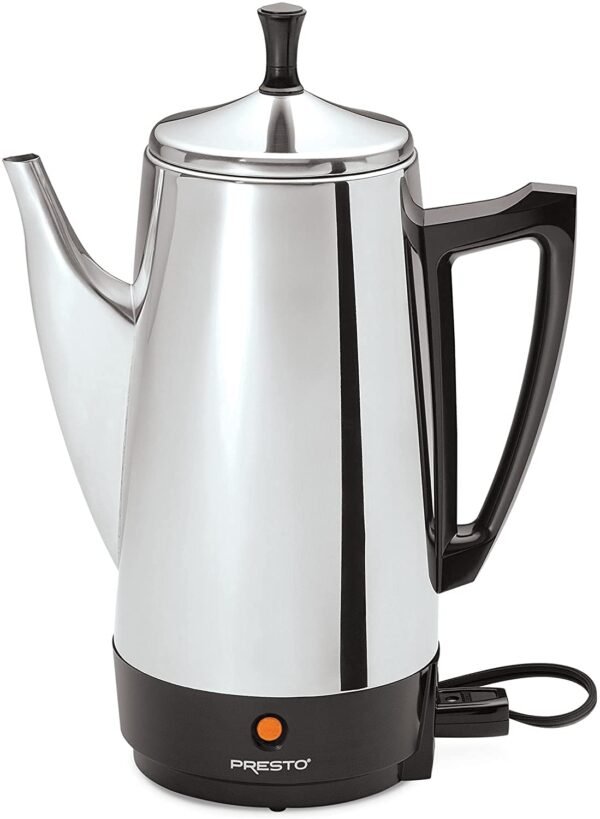
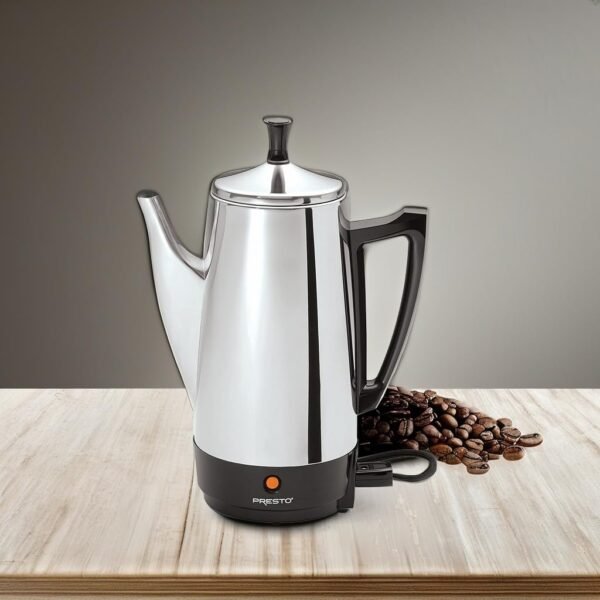
A standout feature is the luxurious stainless steel design that gives this coffee maker a timeless, elegant appearance. It’s easy to clean and resistant to stains, which is a big plus compared to plastic counterparts. The compact dimensions (about 6.25 x 9.5 x 12.9 inches) make it a good fit for most kitchen counters without taking up too much space. The black accents nicely complement the silver body, adding a subtle touch of sophistication. The handle, lid, and spout feel sturdy and well-made, enhancing the overall durability. This setup feels like it could last for many years with proper care.
User-Friendliness and Maintenance
Operating this percolator is straightforward; the instruction sheet is clear, and the brewing process is intuitive. The reusable filter basket helps reduce waste, which I appreciate as an eco-conscious user. I recommend cleaning the perk spout and filter with a brush or pipe cleaner to avoid clogging. The signal light is a thoughtful addition, especially for those who get distracted easily and forget their coffee is brewing. Just remember to unplug and let it cool before cleaning, as the unit itself isn’t designed to be fully submerged. The coffee stain remover option is handy for maintaining the interior’s shine after extended use.
Competitive Options
Comparing this coffee maker to other electric percolators like the Hamilton Beach 12-Cup or the Farberware Classic, the Presto stands out for its all-stainless steel construction, which tends to be more durable and attractive. While some competitors offer programmable features or glass percolator pots for visual monitoring, the Presto’s simplicity appeals to purists who want straightforward, reliable brewing. It falls short against some rivals in terms of cord length and weight, where lighter plastic models offer more portability. However, its automatic keep-warm function and solid build quality make it a strong contender for those prioritizing longevity and traditional coffee taste.
Value Assessment
Considering the features, durability, and brewing performance, this coffee maker offers a smart spending choice for traditional coffee lovers. The fully automatic operation combined with a simple user interface means no steep learning curve or fiddly controls. While it does not have bells and whistles like digital displays or brew strength adjustments, the quality of construction and reliable coffee output justify the investment. If you value stainless steel craftsmanship and classic percolated coffee flavor, this product delivers solid value for money compared to cheaper plastic models that may not last as long or maintain temperature as well.
Perks That Make a Difference
- Stainless steel filter basket and perk tube for durability
- Automatic keep-warm feature keeps coffee hot without bitterness
- Brews from 2 to 12 cups, adaptable to different needs
- Signal light indicates brewing completion clearly
Areas for Improvement
- Heavier weight may be inconvenient for some users
- Short power cord limits placement options on kitchen counters
- Lacks programmable timer and brew strength customization
- Requires careful cleaning to avoid damaging the finish
This percolator certainly brings classic charm and practical functionality to the coffee brewing experience. It excels in durability and simplicity but doesn’t cater to those who want more modern features or ultra-lightweight designs. Its traditional styling and stainless steel build make it a conversation piece as well as a reliable kitchen companion.