Description
Design and Build Quality That Fits Any Kitchen
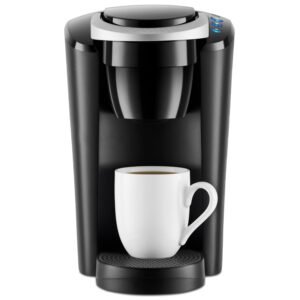
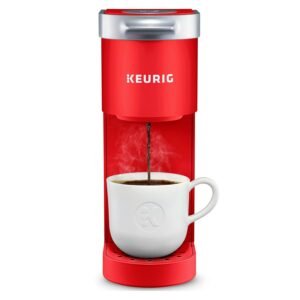
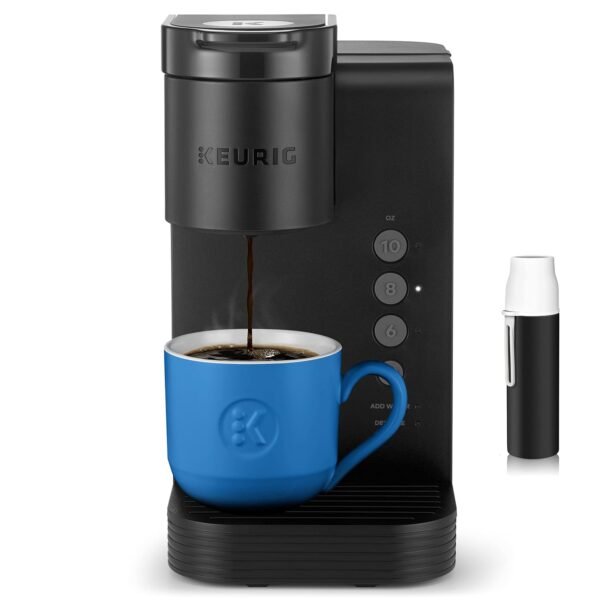
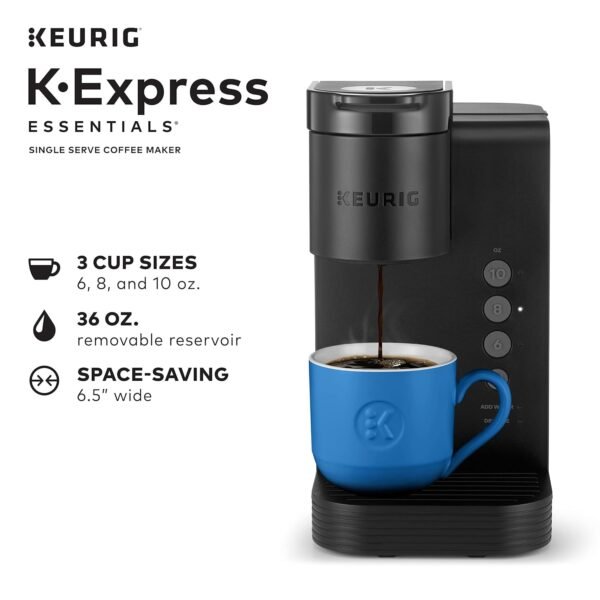
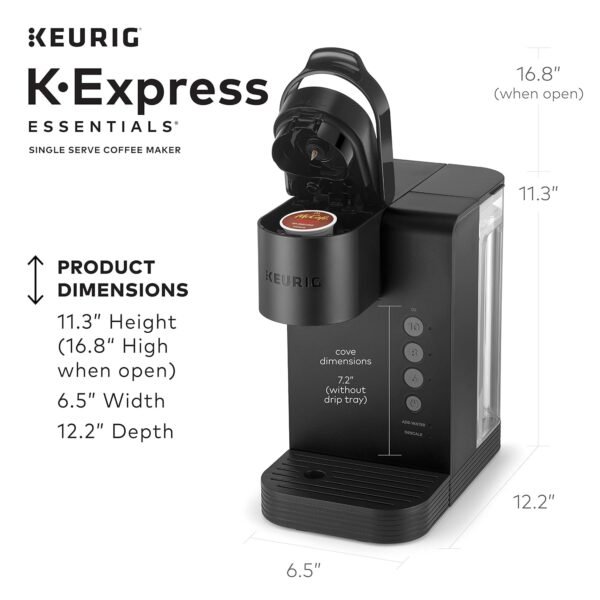
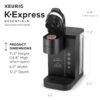
The Keurig K-Express Essentials Coffee Maker, Single Serve K-Cup Pod Coffee Brewer immediately caught my attention with its compact and modern design. Measuring just 12.2″ deep, 6.5″ wide, and 11.3″ high, it fits neatly on any countertop without hogging space. Its sleek black finish gives it a polished look that blends well with other kitchen appliances. The removable 36 oz water reservoir is a thoughtful feature; it’s easy to fill and clean, making daily maintenance a breeze. I also liked how the brewer accommodates travel mugs up to 7 inches tall by simply removing the drip tray, which is perfect for those mornings when I’m rushing out the door.
Brew Size Versatility and Functionality
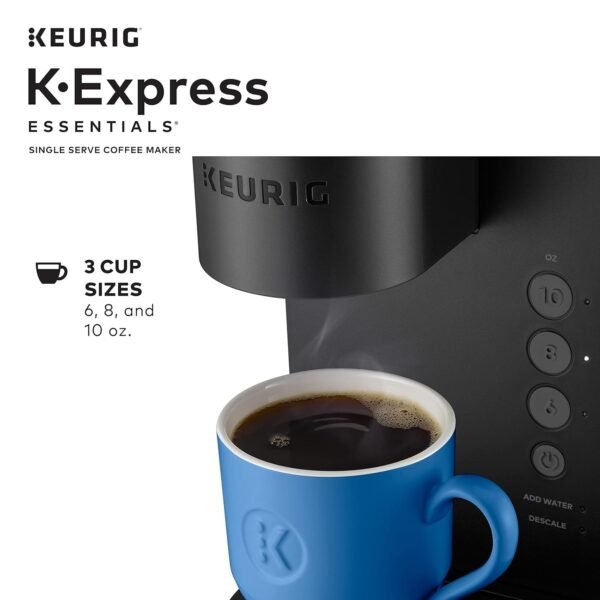
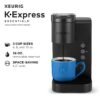
This coffee maker offers three cup sizes: 6, 8, and 10 ounces, which is perfect for customizing your caffeine fix. The button controls are straightforward—no complicated menus or confusing settings. I appreciate how you can brew a quick cup with just a push of a button, and the back-to-back brewing feature lets you make a second cup immediately without waiting for the machine to reheat. The fast brew time means I’m not left twiddling my thumbs while waiting for coffee. Plus, it’s compatible with hundreds of K-Cup pod flavors, including hot cocoa and tea, giving plenty of variety for everyone in the household.
Positive Features That Stand Out
- Strong brew option intensifies the flavor for those who like their coffee bold and robust.
- The removable water reservoir holds enough water for several cups of coffee, reducing the hassle of frequent refills.
- Auto-off feature kicks in five minutes after brewing, which saves energy and gives peace of mind.
- Compatible with the My K-Cup reusable filter, so you can use your favorite ground coffee, which is a win for eco-conscious users.
Drawbacks to Keep in Mind
- The water reservoir capacity while convenient, might not be enough for larger households or offices without frequent refilling.
- The brew sizes max out at 10 ounces, which can feel a bit limited if you prefer larger mugs or multiple cups at once.
- The black plastic exterior shows fingerprints and smudges easily, so I found myself wiping it down more often than I expected.
- Unlike some higher-end models, it lacks more advanced customization options like temperature control or strength levels beyond the strong brew button.
Ease of Use and Maintenance
Operating this coffee brewer is simple enough that even my kids figured it out quickly. The button controls are intuitive; you just pop in a K-Cup pod, select your cup size, and go. The machine reminds you to descale after every 250 brews, which is a handy maintenance alert I didn’t realize I needed. Descaling was straightforward, and the removable water tank makes cleaning easier than expected. I also appreciated the energy-saving auto-off feature, which turned off the machine five minutes after my last cup, alleviating worries about leaving it on overnight.
Comparing With Other Single-Serve Coffee Makers
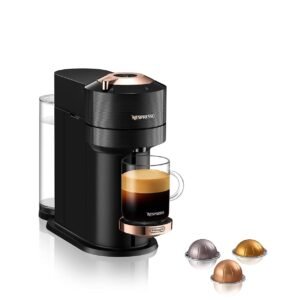
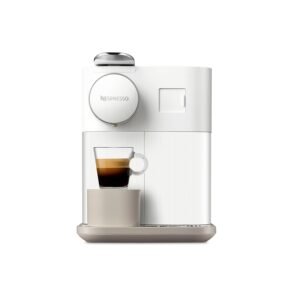
I have tried other single-serve brewers like the Nespresso Vertuo Plus and the Hamilton Beach FlexBrew, so I can confidently say this model holds its own in many ways. Compared to those, the Keurig’s strong brew setting gives it an edge for coffee lovers who want a bolder taste without buying specialty pods. However, it falls short in offering a larger water reservoir than some competitors, which can be a dealbreaker for heavy users. The Nespresso excels in espresso-style coffee and sleek design, but it comes at a higher price point and doesn’t offer the same breadth of pod variety. The Hamilton Beach model offers more brew size options but lacks the quick back-to-back brewing feature that makes this Keurig so efficient during busy mornings.
Value Assessment: Is It Worth the Investment?
For its price point, this coffee maker offers a solid combination of convenience, speed, and quality. It’s definitely a budget-friendly option for anyone who wants a no-fuss brewing experience without sacrificing too much on flavor. You’re paying for a reputable brand with a proven track record in the coffee space, and the inclusion of features like the removable water reservoir and travel mug compatibility add practical value. While it might not have all the bells and whistles of pricier models, the ease of use and consistent coffee quality make it a smart choice for everyday coffee drinkers. If you prioritize a quick cup of coffee with minimal cleanup and decent customization, this brewer delivers well for the price.
User Experience: My Family’s Take
My partner and kids have been enjoying this brewer as much as I have. The kids love the simplicity of popping in their favorite hot cocoa pods, and my partner appreciates the strong brew option for a more robust cup. The ability to brew multiple cups quickly without waiting has saved us from the usual morning coffee battles. The only gripe from my partner is the limited brew size, which sometimes means topping off a mug after the initial pour. Overall, it has become a reliable part of our kitchen routine, especially on busy mornings or lazy weekends.
Summary of Winning Points
- Strong brew option for richer coffee flavor.
- Back-to-back brewing without reheating delays.
- Removable 36 oz water reservoir for multiple cups.
- Travel mug friendly with removable drip tray.
- Simple, intuitive button controls for hassle-free operation.
Areas for Improvement
- Limited maximum brew size of 10 ounces.
- Smudge-prone black finish demands frequent cleaning.
- Water reservoir could be larger for heavy users.
- No advanced brew customization beyond strong brew.
Overall, the Keurig K-Express Essentials Coffee Maker serves as a reliable, easy-to-use machine that delivers fresh coffee quickly. While it isn’t perfect and has some minor drawbacks, its value proposition, ease of maintenance, and consistent brewing performance make it a worthy contender in the single-serve coffee maker market.