


Description
Strengths of the Breville Precision Brewer Drip Coffee Maker
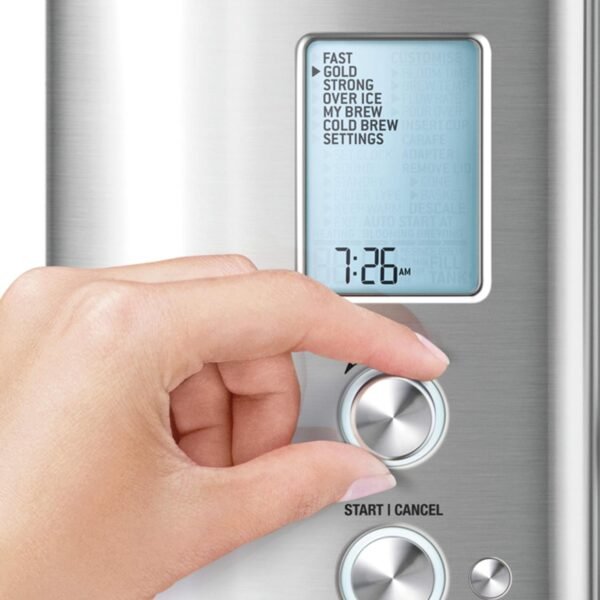
I have to start by praising the versatility and precision this machine offers. The six unique brewing modes, including Gold, Fast, Strong, Iced, Cold Brew, and My Brew, make it incredibly easy to switch between coffee styles without fuss. The Gold Cup Standard mode particularly impressed me, as it adjusts water temperature and brew time to meet the Specialty Coffee Association’s guidelines — that’s a huge plus for anyone serious about coffee quality. The precise temperature control (PID) and three flow rate options allow for real customization, so I could experiment with bloom time and strength to match my taste exactly.
- Offers six customizable brewing modes for diverse coffee preferences
- Complies with Specialty Coffee Association’s Gold Cup Standard for optimal brewing
- Precise digital temperature control and adjustable flow rates for perfect extraction
Drawbacks Worth Noting
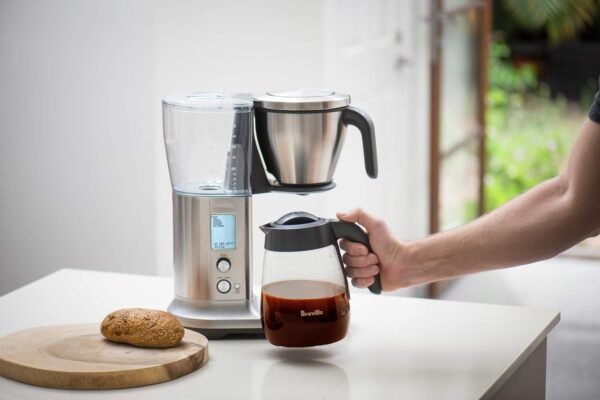
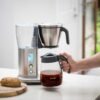
Despite its many perks, the machine isn’t without its quirks. The glass carafe, while stylish and easy to clean, feels a bit fragile and heavy — I had to be extra cautious around my kids. Also, the manual operation mode means there’s a bit of a learning curve to fully mastering the settings; it’s not exactly a “set and forget” machine. Some users might find the control buttons a tad fiddly, especially if you prefer a touchscreen or more modern interface. Lastly, the water reservoir capacity of 60 ounces is great for groups but might be overkill for someone who just wants a quick cup in the morning.
- Glass carafe is fragile and can be cumbersome to handle
- Manual operation requires getting used to settings for optimal use
- Control buttons lack intuitive design compared to touchscreen models
Design and Build Quality Impressions
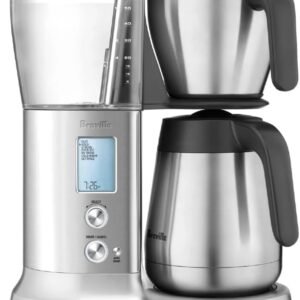
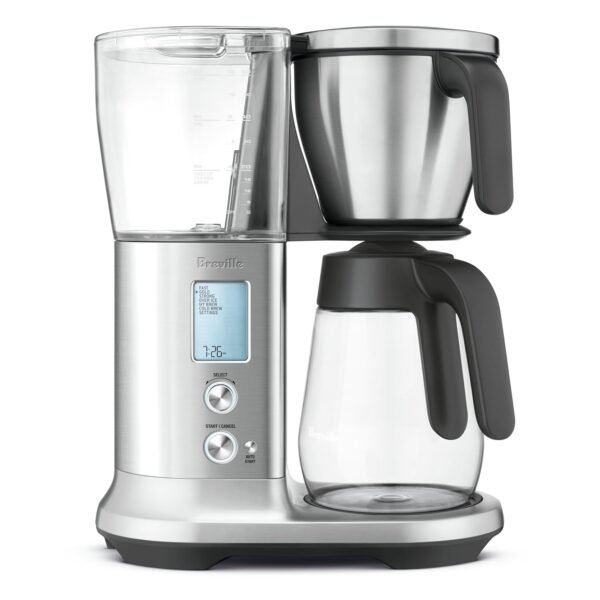
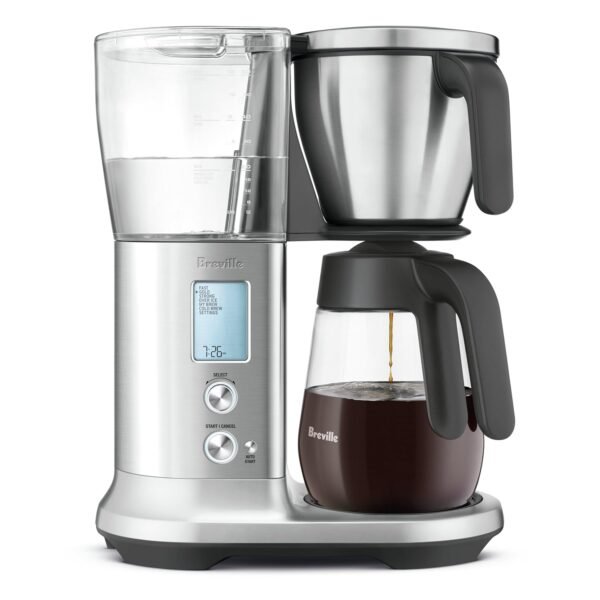
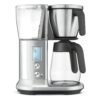
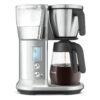
The brushed stainless steel exterior gives this coffee maker a sleek, modern look that fits perfectly on my kitchen counter. It’s a relatively compact unit at 6.7” deep by 12.4” wide and 15.7” tall, so it doesn’t dominate the space. I appreciate the inclusion of multiple filter options—flat bottom and cone filter baskets, plus a mesh basket and paper filters—which adds to the brewing flexibility. The Thermo Coil Heating System impressed me by delivering cleaner water, avoiding the metallic taste some cheaper units produce. However, the 9.5-pound weight makes it less portable, so if you’re thinking of moving it around frequently, it might not be ideal.
Brewing Performance and Flavor Experience
Coffee brewed with this machine consistently hit that sweet spot between strength and clarity. The auto ‘Steep and Release’ technology is a clever feature; it holds water in contact with grounds for small batches without the carafe, a boon for solo drinkers like me. The My Brew setting lets you tweak parameters like bloom time and temperature, so I could dial in a floral, fruity cup or a richer, earthier profile depending on my mood. Cold brew was surprisingly easy to make with the preset mode, delivering smooth and refreshing results without bitterness. The pour-over adapter compatibility also lets me use my favorite Hario V60, which is a neat bonus.
Price to Quality Ratio
This coffee maker sits in the premium range, but I found its features justify the investment for anyone serious about their morning ritual. Considering the versatile brewing options, precision controls, and quality build, it offers good value for money compared to other high-end drip machines. If you’re on a budget or want something simpler, there are cheaper models, but they usually lack this level of customization and temperature accuracy. For those who want café-quality coffee at home without the barista training, this brewer makes a strong case.
Alternative Offerings and Competitors
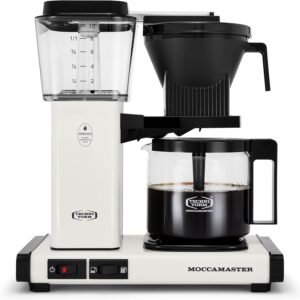
Looking at the market, the Technivorm Moccamaster and OXO Brew 9 Cup often get compared to this model. The Moccamaster excels in simplicity and durability but lacks the precise temperature control and customizable flow rates that set this machine apart. OXO’s model offers programmability and a good price point but doesn’t include cold brew or multiple filter baskets. In contrast, this brewer’s auto steep and release feature and multiple preset modes give it an edge in brewing variety and precision. However, if touchscreen controls or portability are priorities, some rivals might be slightly better choices.
Usability and Everyday Experience
Using this brewer has been a bit of a journey. The manual input buttons require some patience to navigate, but once you get the hang of it, programming your preferred brew is straightforward. I enjoyed the included accessories like the coffee spoon, water hardness test strip, and various filters, which made setup and maintenance easier. The glass carafe’s design looks elegant but demands careful handling, especially with my energetic kids around. Cleanup is manageable thanks to the reusable filters and detachable components. Overall, it feels like a machine built for coffee enthusiasts who appreciate control over convenience.