Description
Strengths of the Waring Commercial CB15 Ultra Heavy Duty Blender
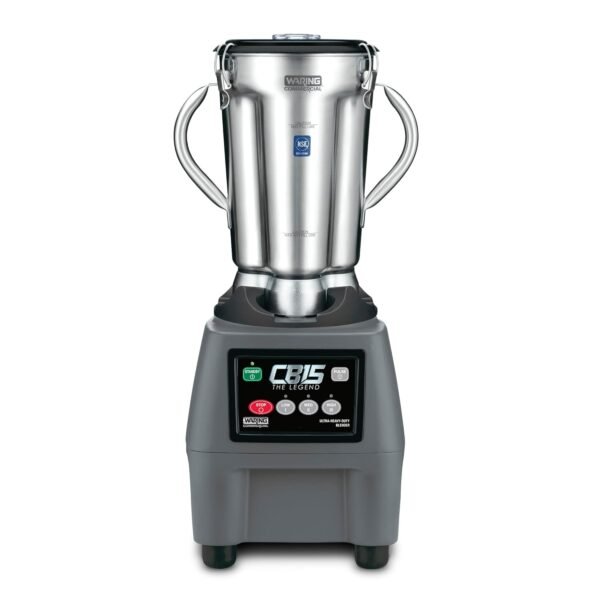
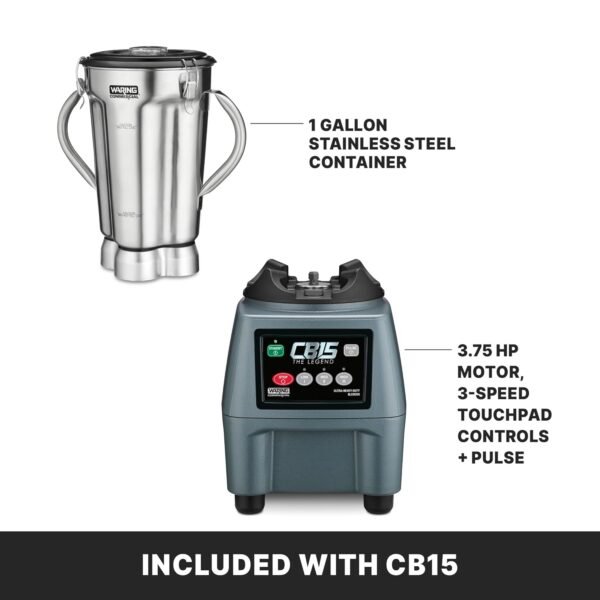
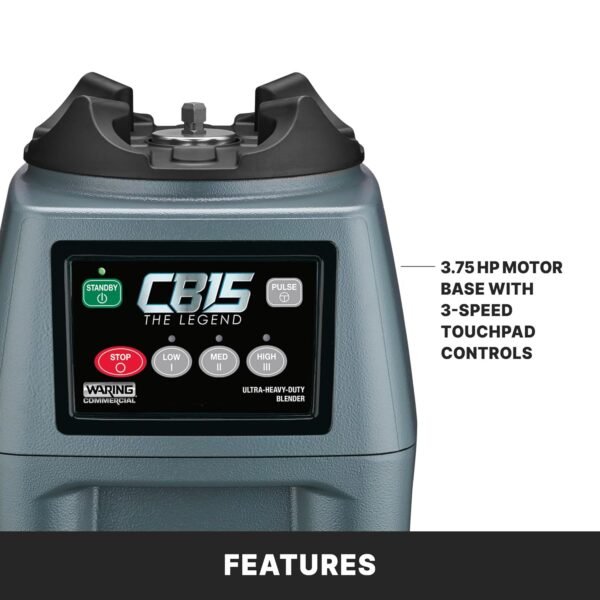
Testing the Waring Commercial CB15 Ultra Heavy Duty 3.75 HP Blender gave me a firsthand look at what a truly commercial-grade blender offers. The powerful 3.75 HP motor is no joke—it effortlessly pulverizes everything from leafy greens to ice chunks without overheating. The three-speed settings, along with the MAX PULSE option, let me customize the texture precisely, whether I was making smoothies, sauces, or crushing nuts. This kind of control is a dream for anyone who needs versatility in their blending tasks.
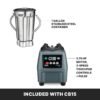
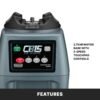
The stainless steel 1-gallon container is sturdy and built for heavy use. I liked the dual handles that made carrying and pouring much easier, especially when the jar was full. Plus, the lid clamps gave me peace of mind during high-speed blending, preventing any accidental spills—a vital feature for busy commercial kitchens or even enthusiastic home chefs. The electronic touchpad controls are intuitive and easy to clean; after all, no one wants sticky buttons after blending a sticky smoothie!
- Ultra-powerful 3.75 HP motor handles tough ingredients with ease
- Durable stainless steel container with convenient handles and secure lid clamps
- User-friendly electronic touchpad that’s simple to wipe down
- Multiple speeds and MAX PULSE for precision blending
Drawbacks That Stood Out
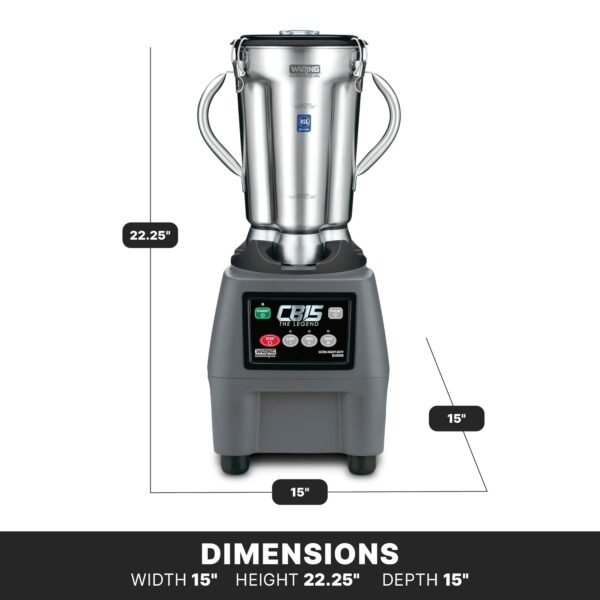
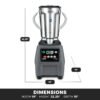
Not everything about this heavy-duty blender was perfect during my time with it. The size and weight—over 32 pounds and standing more than 22 inches tall—make it a beast on kitchen counters. It’s not something you’d want to move around frequently or store away after every use. Its footprint is quite large, which could be a problem in smaller kitchens.
The noise level during operation is intense. I wasn’t surprised by this, considering the motor’s strength, but it could be a dealbreaker in quieter environments or homes with children sensitive to loud sounds. Also, the price point is on the higher end for what some might consider a blender, though it does deliver commercial-grade performance. It lacks a few extra features that some newer models have, like variable speed dials instead of preset speeds, which could offer even more precision.
- Bulky and heavy, not suitable for small kitchens or frequent repositioning
- Louder than typical home blenders, which could disturb some users
- Higher price point compared to standard consumer blenders
- Limited speed settings without a variable dial for finesse
Safety and Convenience Features That Impress
Safety was clearly a priority in this design. The blender includes a safety lock mechanism that prevents operation unless everything is properly secured—no accidental starts, which is reassuring. The auto shut-off feature adds an extra layer of protection by stopping the motor if it overheats, helping to extend the blender’s lifespan.
Cleaning was less of a headache than expected. The removable stainless steel blade can be taken out for thorough washing, and the container itself is dishwasher safe, which saved me a lot of time. The BPA-free and lead-free materials used throughout the blender mean it’s safe for preparing food, a detail I always check for when blending for my family.
User Experience and Practicality in Daily Use
I often prepare batches of smoothies and sauces for family gatherings, so the 1-gallon capacity was a major plus for handling large quantities without constant refills. The dual handles make pouring easier even when the jar is full, which I appreciated during busy mornings. The electronic touchpad is responsive and stays clean, which beats those old-fashioned knobs that can get gunky.
My children, who are picky about texture, found the blends smooth and consistent, thanks to the high-performance stainless steel blades. The machine’s ability to crush ice and frozen fruit without leaving chunks is impressive, making it a great choice for smoothie lovers. However, its industrial look and size make it feel more at home in a commercial kitchen than a cozy home setting.
Competing Brands and How This Blender Measures Up
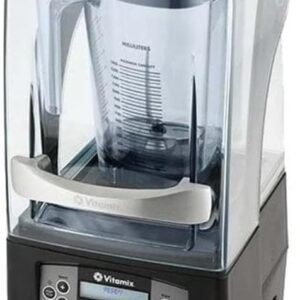
Comparing this heavy-duty blender to popular rivals like Vitamix and Blendtec reveals some interesting points. While Vitamix offers variable speed control and sleek design, it generally has smaller jar sizes and less raw motor power than this model’s 3.75 HP motor. Blendtec’s models focus heavily on smart technology and pre-programmed cycles, which this blender lacks, but the stainless steel container here is far more durable and better suited for high-volume use.
The Waring stands out for durability and sheer motor strength, making it ideal for commercial kitchens or serious home chefs who prioritize power over flashy features. However, it loses some ground in terms of noise reduction and compact design, where rivals offer quieter operation and more stylish builds. Depending on your priorities—power versus convenience—this blender could either be a perfect fit or feel a bit too industrial.
Value for Money and Long-Term Investment
This blender’s cost might make some hesitate, but the 3-year limited warranty provides reassurance that it’s built to last. For businesses or individuals who regularly blend large batches or tough ingredients, the investment can pay off through durability and performance. The made-in-the-USA quality, combined with cETLus and NSF certifications, means it meets strict safety and hygiene standards—a must in professional food preparation.
If budget is tight and daily blending is occasional, this might feel like overkill. Yet, for those who need a robust, reliable machine that won’t quit after a few uses, the price is justified. The heavy-duty motor, large capacity, and safety features make it a strong contender for anyone serious about blending.
Additional Features Worth Mentioning
The programmable functions are a nice touch, allowing me to set specific blending times and speeds—a feature not always found in commercial blenders. This automation helps avoid over-blending and gives consistent results. The electronic membrane keypad is less prone to damage from spills compared to mechanical buttons, adding to the blender’s longevity.
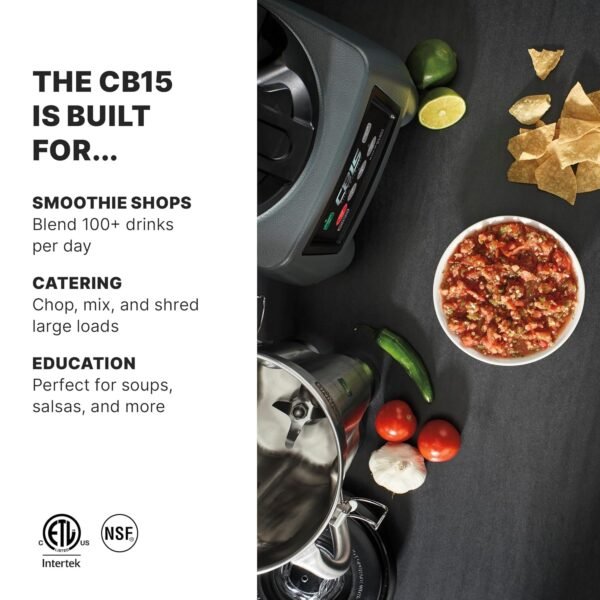
Overall, the design focuses on ease of use and maintenance, which is crucial for a machine expected to handle over 100 drinks per day. The removable blade system makes it easier to clean and replace parts, saving time and money in the long run. These thoughtful touches show that this blender was designed with professional kitchens in mind, but can certainly be used by dedicated home cooks as well.